

Marykirk.com is a Fibre and Fixed Wireless internet Provider,
based in Marykirk, Aberdeenshire.
We can provide your home, your office, your business premises or your farm with fast internet.
We are Marykirk.com - based in Marykirk, and have been providing rural internet for 10+ years. We have around 800 customers, and cover 1,000km².
Our second phase of Fibre to the premises is now open!
Please visit our Fibre page
If you want to order a Fixed Wireless Internet Service:
We use Fixed Wireless to serve properties that can not yet get Fibre Broadband. Please use the Contact form to get in touch if you have any questions, or the Can I get this Service? form to request a free fixed wireless site survey. We will then get in touch, establish if you can receive the service and arrange next steps.
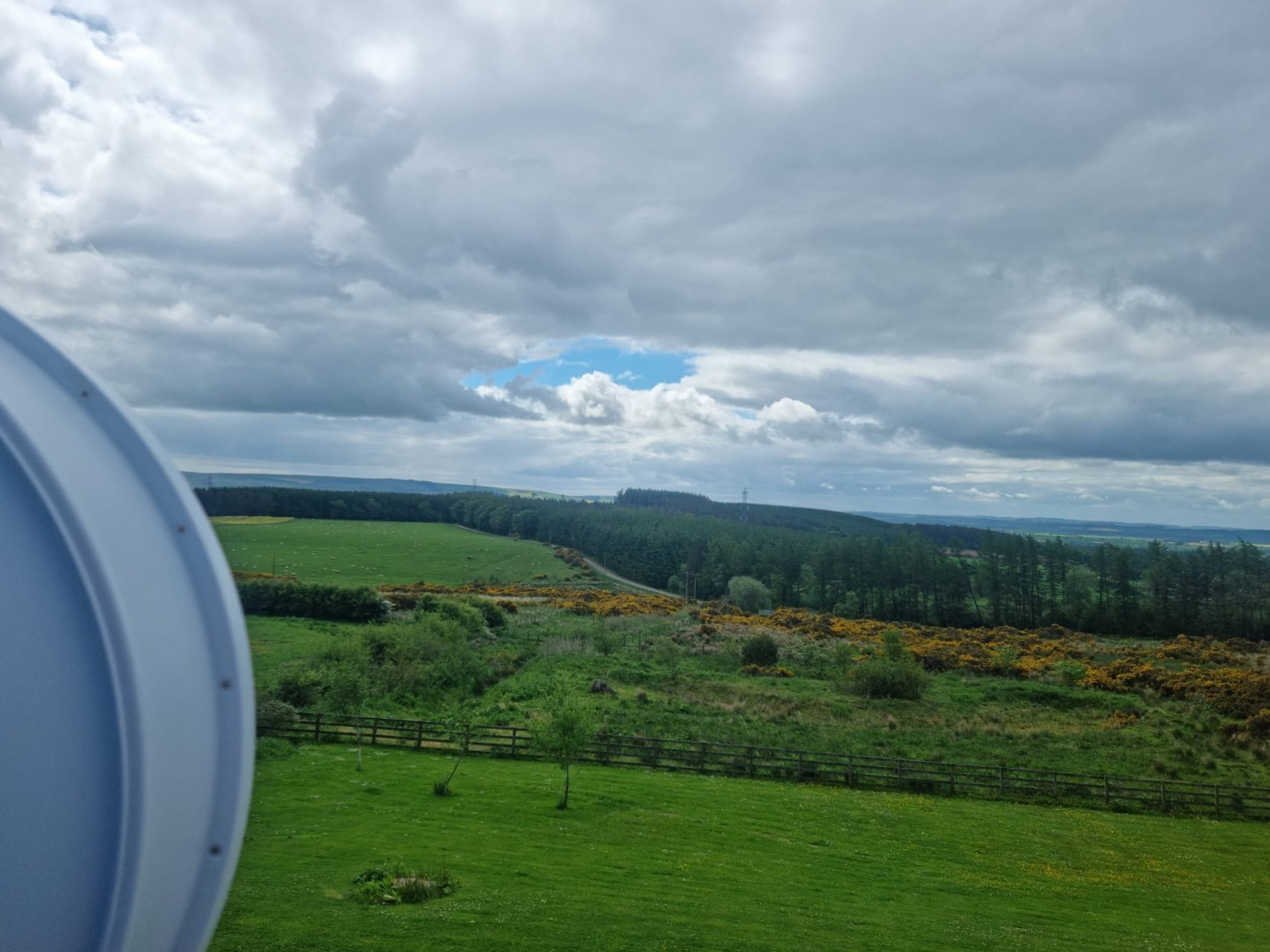
An example fixed wireless antenna, pointing at the distant access point - in this case, almost 10km away.
Videos
How this works
What is a Wireless Internet Service Provider (WISP)? How does it work? What kit is going to be installed? This short explainer video will give you the overview on what to expect.
UKWISPA:
Why Your Internet is Slow
Available Packages: Fixed Wireless
| Name | Cost | Speed | Data Limit | Use |
|---|---|---|---|---|
| Basic | £36 per Month | 20Mb / 2-4Mb | 350GB Fair Use | Ideal for: small households with 3 people or less, and only 1 streaming media device |
| Standard | £45 per Month | 35Mb / 3-5Mb | 800GB Fair Use | Ideal for: small households, with fewer internet users (less than 3), and only 1 streaming media device |
| Professional | £60 per Month | 60Mb / 4-5Mb | Unlimited | Ideal for: larger household/small business where you may require Voice Over IP Streaming |
| Custom | PoA | As required | Unlimited | Ideal for: larger business with business critical internet connectivity needs |
*Note: These speeds are not available across our entire network yet. We are upgrading infrastructure to support these packages and will keep new and existing customers informed as they become available.
Old Fixed Wireless Packages. These are only in use on small parts of our network.
| Name | Cost | Speed | Data Limit | Use |
|---|---|---|---|---|
| Consumer | £30 per Month | 5-8Mb / 2-3Mb | 200Gb Fair Use | Ideal for: small households with 3 people or less, and only 1 streaming media device |
| ProConsumer | £36 per Month | 12-14Mb / 3-4Mb | 500Gb Fair Use | Ideal for: small households, with fewer internet users (less than 3), and only 1 streaming media device |
| Business | £48 per Month | 18-22Mb / 4-5Mb | 1,000Gb Fair Use | Ideal for: very large household or busy small business. |
FIBRE to the PREMISES (FTTP) PACKAGES (WHERE AVAILABLE)
| Name | Cost | Speed | Data Limit | Use |
|---|---|---|---|---|
| Fibre Basic | £39 per Month | 120Mb / 20Mb | Unlimited | Ideal for: small to medium household or with fewer internet users. |
| Fibre Standard | £49 per Month | 300Mb / 50Mb | Unlimited | Ideal for: larger household or with more internet users. |
| Fibre Professional | £59 per Month | 500Mb / 75Mb | Unlimited | Ideal for: larger household/small business where you may require Voice Over IP Streaming. |
| Ultrafast | £69 per Month | 900Mb / 115Mb | Unlimited | Ideal for: larger business with business critical internet connectivity needs. |
Note:
All prices include VAT at 20%.
Please contact us to see which of our packages are available in your area.
Our installation charges start at £300 - the final cost will be calculated after our free site survey.
We can provide a public IP address for an additional £6/month, if required. A public (or ‘fixed’) IP address can give you remote access to your cameras, servers, etc.
We assume that you will pay by Direct Debit, using the GoCardless service (which we set up for you). If you do not wish to pay by Direct Debit, a monthly administration fee of £5 (including VAT) will be applied to your account.
Please use the Contact form to get in touch if you have any questions, or the Can I get this Service? form to request a free site survey. We will then get in touch, establish if you can receive the service and arrange next steps.